

How To Activate A Virtual Environment In Windows
A Virtual Environment or a "venv" is a Python module that creates a unique environment for each chore or projection. It installs the packages we need that are unique to that setting while keeping your projects neatly organized. Additionally, venv never actually modifies the system's default Python versions or modules that are installed on the system. Using venv essentially allows for a unique working environment while fugitive any disruptions to other variants of Python that are used, but not related to our project.
Prerequisites
We recommend enabling the Windows Subsystem for Linux (WSL) in club to have full advantage of all the functionality of venv on Windows 10. This allows you to run a full Linux distribution within Windows to aid in the functionality of the new dev environment.

Why should I apply WSL?
- Many of the tutorials for Python are written for Linux environments.
- Most devs employ Linux based packaging/installation tools.
- Using WSL ensures compatibility between development and product environments
How practise I enable WSL?
- Get to Start > and then search for "Plow Windows features on or off."
- Click the link to open the Windows control panel.
- Next, open the Windows features pop-upwards menu.
- Curlicue down in that list to locate the "Windows Subsystem for Linux" option and select the checkbox.
- Reboot.
Note:
WSL will require you lot to download a version of Linux noted here.If you lot're using Windows (without WSL), simply install Python 3 from the Python website. The venv module is incorporated into that Windows installation.
Install Linux
There are multiple Linux distros that work with WSL. You can locate and install them from the Microsoft Store. We recommend starting off with a Ubuntu eighteen.04 LTS distribution equally it'due south upward to date, has an excellent support customs, and is well documented.
- To install Ubuntu, click this Ubuntu 18.04 LTS link. This will open the Microsoft shop where you can click on the Become push.
- Once the download has completed, type "Ubuntu 18.04 LTS" into your Start card.
- Next, you'll be asked to create a username and password equally it will be your first time using this Bone.
- Later on, y'all will now exist signed in automatically as the default user.
- Lastly, we'll need to run an update on the new OS. You can accomplish this by running:
sudo apt update && sudo apt upgrade As a side notation, Windows does not handle upgrades for this Os so you lot will need to ensure Ubuntu stays up to appointment past running the update and upgrade commands manually.
Yous tin then install your distro using PowerShell. To install one of those distros, navigate to the binder which contains the newly downloaded Linux distributions. Once in that folder, run the following control in PowerShell (where app_name.aspx is the proper noun of the distribution file):
Add together-AppxPackage .\app_name.appx Next, nosotros'll add together the path to the distro into your Windows environment PATH using Powershell (eg. C:\Users\Admin\Ubuntu)
$userenv = [System.Environment]::GetEnvironmentVariable("Path", "User") [System.Environment]::SetEnvironmentVariable("PATH", $userenv + ";C:\Users\Admin\Ubuntu", "User") Now, we can start the distro past typing in uubuntu.exe. Side by side, we should initialize the new instance.
Launch a distro
To finish the initialization of your newly installed distro, we volition need to launch a new instance. Y'all can accomplish this by clicking on the "launch" button in the Microsoft app shop, or by launching the distro'south .exe file from the Start menu. Additionally, if using a Windows Server, you can start the distro's launcher'southward executable file (Ubuntu.exe) from the distro'south installation binder.
During the terminal phase of the installation, the distro'south files will exist decompressed and stored locally on your PC. This procedure may accept a few minutes merely is only required in one case. Later on initializations should take less than a second.
Setup
There are four basic steps to install a virtual environment on windows:
- Install Python
- Install Pip
- Install VirtualEnv
- Install VirtualEnvWrapper-win
Note:
Remember, these commands should be run within the WSL Ubuntu environment. Additionally, the sudo command may exist needed if non running equally the root user.
Step i. Install Python
Python 3.8.0 is the latest major release of Python.
- Annotation: There is now a "web-based" installer for Windows. This installer will download the required software during the installation.
- At that place are also Python redistributable files that contain the Windows builds, which makes information technology easier to include Python in another software package.
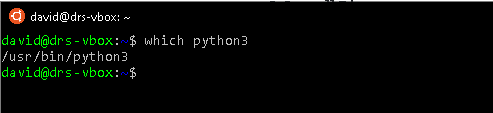
- If you installed Ubuntu 18.04 from the above list, Python3 comes pre-installed.
Step ii. Install PIP
We suggest following the directions located hither in our knowledge base commodity regarding installing PIP on Windows. Python3 usually comes with pip preinstalled, nonetheless, if you lot get the error "pip command not found," just use the post-obit method to install pip.
roll https://bootstrap.pypa.io/become-pip.py -o get-pip.py - Download get-pip.py, and make sure yous're saving the file to your Desktop.
- At your Windows Command Prompt, navigate to your Desktop and run the get-pip.py script. Afterward that, pip should piece of work organisation-wide
Note:
You may need to have administrative privileges at the command prompt to attain this task. For more than info on this, follow the directions from Start a Control Prompt as an Administrator from the Microsoft TechNet website.
cd Desktop Python go-pip.py
Step 3. Install Virtualenv
In your Windows command shell prompt blazon in:
Get-go virtualenv
In your windows control prompt, head to your projection location:
Once inside the project binder run:
Activate virtualenv
On Windows, virtualenv (venv) creates a batch file chosen
\env\Scripts\activate.bat To activate virtualenv on Windows, and activate the script is in the Scripts folder :
\pathto\env\Scripts\activate Example:
C:\Users\'Username'\venv\Scripts\actuate.bat
Step 4. Install VirtualEnvWrapper-win
There are two main methods we recommend to install this batch script.
- Using pip
pip install virtualenvwrapper-win - Install from source
git clone git://github.com/davidmarble/virtualenvwrapper-win.git We then cd to the virtualenvwrapper-win folder and run:
And that's information technology! Python'due south venv is gear up and set up to use.
Catch Your Complimentary Coupon Today!
Check out all the specials we have going on right at present where you lot can save HUGE on our Dedicated server, Cloud Dedicated server every bit well as our VPS Servers! Additionally, check out the coupon below for even greater savings!!!
Source: https://www.liquidweb.com/kb/how-to-setup-a-python-virtual-environment-on-windows-10/
Posted by: tolartherect.blogspot.com
0 Response to "How To Activate A Virtual Environment In Windows"
Post a Comment